Michael W. Magee, PhD
Trained MSC Teacher · Professor of Psychology · 15-year daily practitioner
Self-Compassion NYC began as a personal practice that wouldn't let go. After fifteen years of daily mindfulness and self-compassion work, a seven-day silent lovingkindness retreat with Sharon Salzberg, and trained-teacher status with the Center for Mindful Self-Compassion, I decided to bring this work to the people who tend to need it most — the high-functioning, the over-responsible, the ones who are hardest on themselves.
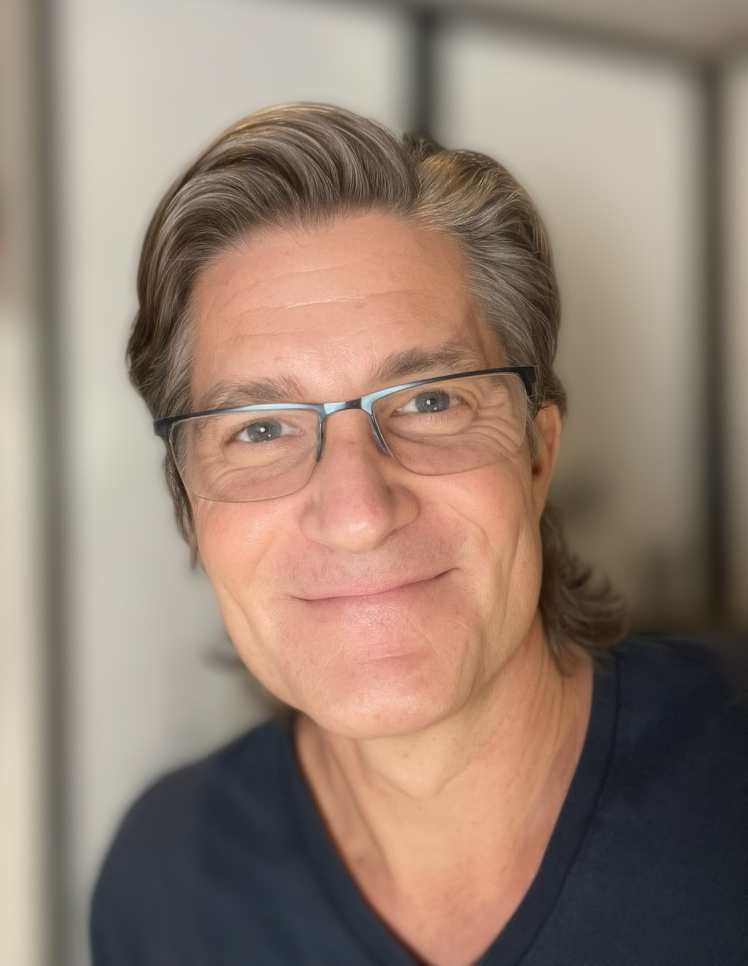
How I got here.
For the past fifteen years, I've maintained a daily mindfulness and self-compassion practice. It started, as it often does, in real pain — I came to lovingkindness meditation looking for a way through a painful familial estrangement. The transformation it offered was so profound it changed the trajectory of my life.
Not long after, I sat a seven-day silent lovingkindness retreat led by Sharon Salzberg. That's where the seed was planted: I knew I had to share these practices with others. A short while later I earned trained-teacher status with the Center for Mindful Self-Compassion — the global standard-setter for MSC instruction.
In my day job, I'm a Professor of Psychology at St. Joseph's University in New York. I run our undergraduate research program and have served five years as IRB chair. My academic research sits at the intersection of self-compassion, masculinity, and the social psychology of helping. Self-Compassion NYC is where the research meets people who actually need the practice.
Evidence-based. Buddhist-psychology-informed. No woo.
Mindful Self-Compassion was developed by Christopher Germer and Kristin Neff, and it sits on a foundation of two decades of empirical research. I take that seriously. Every claim I make in a workshop or 1:1 session is one I can point to a study for — and when the research is mixed or thin, I say so.
At the same time, the practice itself is rooted in Buddhist psychology. The three pillars — mindfulness, common humanity, self-kindness — predate the empirical literature by about 2,500 years. I treat them as the contemplative inheritance they are, while teaching them in a secular, accessible idiom that works for therapists, lawyers, academics, founders, parents, and anyone else who's spent too long being their own harshest critic.
What you won't get from me: spiritual-bypass aphorisms, vague reassurance, or pressure to convert anything. What you will get: warm, direct, evidence-based instruction in a set of practices that, when you do them, tend to work.
A few things to know.
I'm a passionate vegan, an avid long-distance runner (the ultramarathon as sustained-effort metaphor is real to me), and the proud father of two grown kids. Summers usually find me on silent retreat or out hiking and camping in the woods. I love chess, I noodle on guitar, and in a past life I was a musical theatre performer in London's West End — which is to say, I am not allergic to feelings or to playing the long game in front of an audience.
I live in Brooklyn. I work in person in NYC and virtually with clients anywhere in the world.